
Best Shoes for Pickleball
Pickleball’s explosive growth has players scrambling for gear that matches its unique demands: rapid lateral shuffles, quick pivots, and non-stop kitchen-line battles.
The wrong shoes can lead to slips, sprains, or early fatigue, while the right pair boosts confidence and performance.
Wondering, ‘What type of shoes are best for pickleball?’ Or ‘Can I wear running sneakers for pickleball?’
This guide answers those, plus ‘Can you wear the same shoe for tennis and pickleball?’, with expert insights on features, choices, and top picks to keep you moving safely and swiftly on any court.
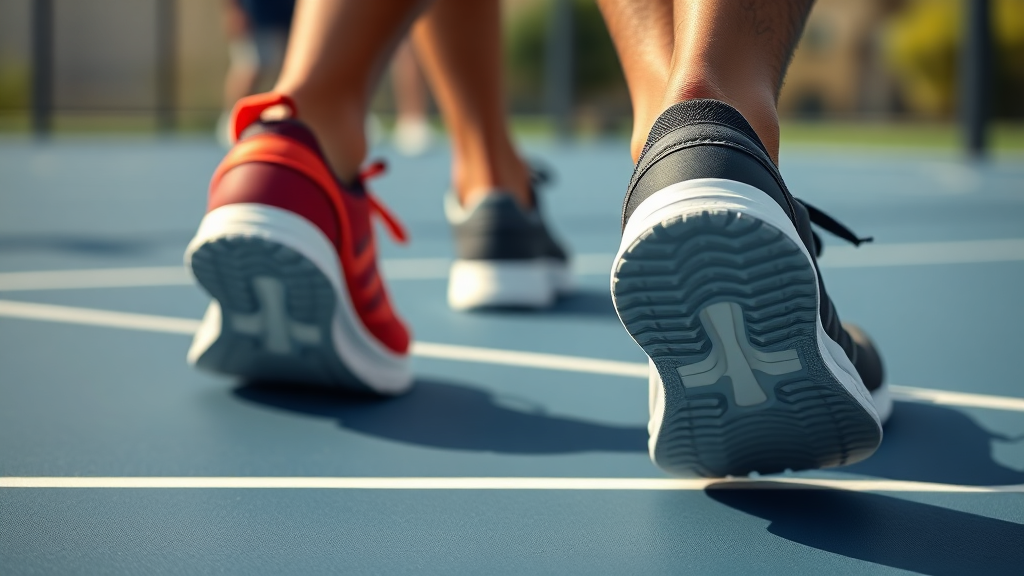
What Type of Shoes Are Best for Pickleball?
Pickleball demands shoes optimized for court sports, prioritizing lateral stability over forward propulsion.
Court shoes with reinforced sidewalls and midfoot shanks prevent ankle rolls during aggressive side-to-side cuts. Opt for a low-to-moderate profile that keeps your center of gravity stable for explosive direction changes.
Outsoles should feature durable, court-specific rubber in herringbone or multi-surface patterns for superior grip on acrylic hard courts or indoor gym floors. Non-marking soles are essential for indoor venues to avoid black scuffs—a rule at most facilities.
Breathable mesh uppers with targeted cushioning provide all-day comfort without sacrificing ground feel, crucial for reading dinks and volleys. Avoid high-cushion trainers; they compress too much under lateral stress.
In 2025, brands like ASICS, K-Swiss, and Babolat lead with pickleball-tuned models balancing these traits for recreational to tournament play.
Can I Wear Running Sneakers for Pickleball?
Short answer: occasionally yes, but not regularly. Running sneakers excel at absorbing forward heel-to-toe impacts on roads or trails, with flexible midsoles and minimal side support.
Pickleball’s multidirectional chaos—lateral slides, pivots, and stops—exposes their weaknesses: softer sidewalls twist easily, and curved rocker soles reduce stability on flat courts.
This mismatch heightens sprain risk and accelerates outsole wear from skidding. Casual players might get away with them for light sessions, but frequent use leads to fatigue and injury.
Pros recommend transitioning to court shoes immediately for safer, more efficient movement. If you’re stuck short-term, choose firmer running shoes with better stability, but prioritize dedicated pickleball footwear for longevity and performance.
Can You Wear the Same Shoe for Tennis and Pickleball?
Absolutely, with caveats—tennis shoes are a solid crossover option. Both sports share court demands: lateral support, durable outsoles, and low profiles.
Tennis shoes’ robust builds handle pickleball’s cuts and sprints well, especially outdoors on similar acrylic surfaces. Many pros and rec players swap seamlessly.
However, pickleball-specific shoes often feature lighter cushioning for shorter rallies and net-focused play, plus outsoles tuned
for more frequent forward/backward shuffles. Tennis shoes emphasize drag-proof durability for longer points.
Choose based on your primary surface (harder rubber for outdoor tennis/pickleball) and frequency. If dual-sporting often, a versatile multi-surface court shoe like ASICS Gel-Resolution or K-Swiss Ultrashot works best.
Indoor players: ensure non-marking compliance.
How to Choose the Right Pickleball Shoe: Actionable Checklist
Selecting the perfect pair boils down to surface, support, fit, and durability.
**Surface match**: Indoor gyms need soft, non-marking gum rubber for grip without marks; outdoor acrylic/asphalt requires abrasion-resistant soles.
**Support features**: Seek reinforced sidewalls, midfoot shanks, torsion plates, and secure heel counters for lateral security.
**Proper fit**: Shop late-day when feet swell; aim for a thumb’s width toe room, locked heel, and no forefoot slide. Wide fits available for broader feet.
**Cushioning balance**: Moderate foam for impact without mushiness—extra arch/heel padding if prone to pain.
**Durability test**: Thicker outsole rubber for outdoors; softer for indoors.
Test in-store with shuffles and sprints. Rotate pairs weekly, replace every 6-12 months or when traction fades. Budget $80-150 for quality.
Top Recommendations, Categories, and Common Mistakes to Avoid
**Beginner/Budget ($80-120)**:
K-Swiss Express Light—affordable lateral support, versatile surfaces.
ASICS Gel-Rocket—reliable entry-level grip. **Recreational/Comfort
($120-150)**:
Skechers Viper Court Pro—plush yet stable, senior-friendly.
ASICS Solution Speed FF—lightning-quick with top traction; Babolat Jet Mach 3—responsive for aggressive play. Prices fluctuate; check retailers like Dick’s or Amazon for 2026 updates.
**Mistakes to dodge**:
Don’t default to running shoes—forward bias causes instability. Skip overly cushioned lifestyle sneakers; they lack court grip. Avoid online-only buys without returns—test fit rigorously. Ignore surface specs at your peril: wrong soles slip or wear fast.
Pro tip: Pair with pickleball socks for blister-free sessions.
Conclusion
Elevate your game today: assess your court surface, budget, and foot needs, then test 2-3 court shoes from trusted brands like ASICS or K-Swiss.
Prioritize lateral support, non-marking traction, and a secure fit to slash injury risk and amplify agility. Invest once in
quality—rotate pairs, maintain them, and replace proactively.
You’ll dodge slips, feel the court better, and stay in rallies longer. Whether beginner or tournament-bound, proper shoes transform pickleball from fun hobby to peak performance. Lace up smart, play harder.