
Pickleball vs Tennis Shoes
Pickleball vs Tennis Shoes — What to Wear, Why It Matters, and Practical Picks.
Wearing the wrong shoe increases fatigue, reduces performance, and raises injury risk — especially rolled ankles and foot pain.
This guide answers the common questions players ask (including “Can I wear running sneakers for pickleball?”), explains what to look for in a court shoe, and gives actionable buying and maintenance tips so you can play longer and safer.
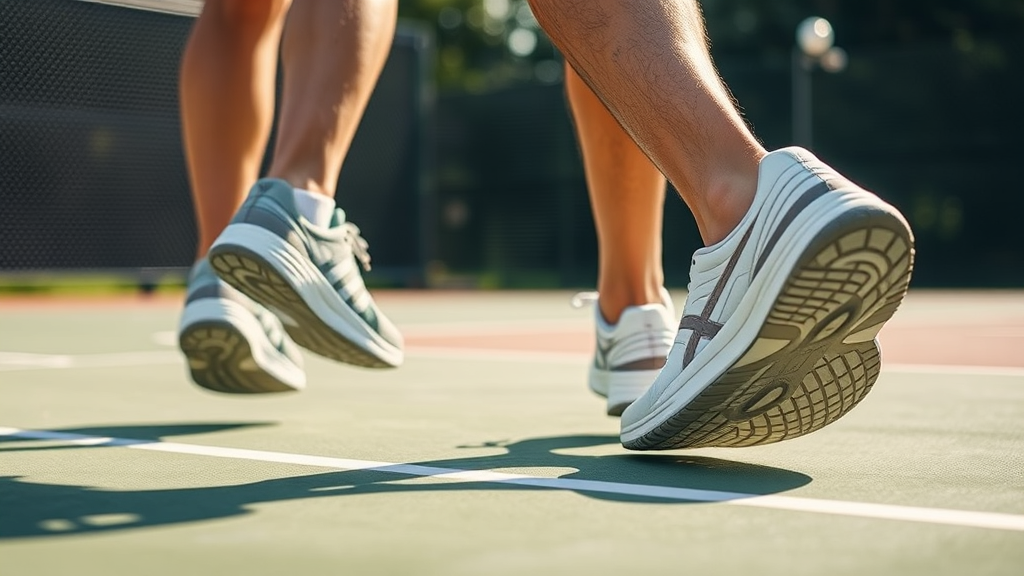
Why shoe choice matters for court sports
Pickleball is played on a smaller court (20×44 feet) than tennis, which concentrates movement into short, explosive lateral bursts and quick forward-backward changes near the net.
Shoes designed for running prioritize forward cushioning and heel-to-toe drop, while court shoes are built with lower profiles, wider bases, and reinforced uppers to resist twisting and sliding.
Wearing purpose-built court footwear improves stability, traction, and durability on both indoor and outdoor hard courts.
Can I Wear Running Sneakers for Pickleball?
Short answer: You can in a pinch, but it’s not recommended for regular play.
Running sneakers excel at cushioning for repetitive forward motion, long-distance shock absorption, and lightweight flexibility — none of which address the frequent lateral demands of pickleball.
Using running shoes for regular pickleball play increases the chance of ankle sprains, toe dragging, and faster shoe wear.
If you’re trying pickleball for the first time or playing one casual session, running shoes will work temporarily, but for frequent play invest in a court shoe.
When running shoes might be acceptable
– If you have a medical/orthotic reason that requires the cushioning of a running shoe, discuss it with a podiatrist and pair it with a supportive orthotic.
– For very light, single sessions where no intense lateral play is expected, running shoes are better than sandals or fashion sneakers.
But remember: repeated lateral stress in running shoes is what causes problems over time.
What type of shoes are best for pickleball?
Look for court-specific features: lateral support, durable outsole, low-to-medium heel-to-toe drop, and a stable midsole.
– Lateral support & reinforced upper: prevents roll and controls side-to-side motion.
– Outsole pattern & rubber compound: non-marking gum or herringbone patterns work well indoors and outdoors respectively; a durable rubber resists wear from hard outdoor courts.
– Low profile and wide base: keeps your center of gravity closer to the court for quick direction changes and balance.
– Cushioning balance: enough to protect knees and joints during repeated stops, but not so soft that lateral stability is compromised.
Types of court shoes to consider:
– Pickleball-specific shoes: built from the ground up for the sport; younger market but increasingly common and tuned for quick lateral play.
– Tennis court shoes: often an excellent alternative — particularly those built for hard courts — because they are designed for lateral movement and toe-dragging.
– Multi-court/cross-training shoes: okay for casual players if they have a stable outsole and reinforced sides, but check durability and tread pattern before relying on them.
Can you wear the same shoe for tennis and pickleball?
Yes — often you can, but there are trade-offs.
Tennis shoes (especially hard-court models) and high-quality pickleball shoes share the key traits: lateral stability, durable outsoles, and protective toe reinforcement.
Many players successfully use tennis shoes for pickleball; pro and recreational players often choose tennis court shoes for their durability and support.
However, some pickleball-specific models tweak weight, toe-box room, or cushioning to fit pickleball’s closer-in, continuous lateral play.
If you play both sports regularly, choose a versatile court shoe designed for hard courts or rotate shoes by sport to extend shoe life.
When to use separate shoes
– Competitive players who want the lightest feel or sport-specific tuning may prefer dedicated shoes for each sport.
– If you play mostly on outdoor rough courts, pick a tennis shoe with a highly durable outsole for pickleball to avoid rapid wear.
How to choose, fit, and maintain your court shoes (actionable tips)
– Fit: Try shoes at the end of the day when feet are slightly swollen. Leave a thumb’s width in front of the longest toe and ensure a snug midfoot fit.
– Test for lateral feel: In the store or at home, do lateral shuffles and quick stops; your foot should feel secure without excessive sole roll.
– Replace on schedule: Frequent players should consider replacing shoes every 40–60 hours of court time or sooner when tread and midsole support degrade. Worn soles = lost traction and increased injury risk.
– Break them in: Wear new shoes for light sessions first; this short break-in period prevents blisters and helps you identify fit issues before competitive play.
– Rotate and clean: Rotate between two pairs if possible to let midsoles decompress; clean soles to maintain traction and inspect for uneven wear.
Conclusion
If you’re playing pickleball regularly, skip the running sneakers and choose a court shoe — either a pickleball-specific model or a durable tennis shoe designed for hard courts.
Look for lateral support, a stable low profile, and an outsole matched to your indoor/outdoor surface.
If you play both tennis and pickleball, a high-quality hard-court tennis shoe will often serve both sports well; rotate or buy sport-specific models if you play competitively.
Finally, fit and timely replacement matter as much as brand: try before you buy, break shoes in gradually, and replace them when support or tread degrades.